
The incident came shortly after a spokesperson from Iran's military warned that Tehran could target ports and docks in the United Arab Emirates following recent United States strikes on Kharg Island, a key hub for Iran's oil exports.

The ceasefire is still technically holding, to the extent that no overt hostilities have been reported yet, but the rhetoric has hardened dangerously. The week ahead will also clarify whether the Islamabad failure was a negotiating tactic or whether Washington has genuinely locked itself into a position from which the only exits are climb-down, escalation, or the slow bleed of a new status quo that nobody chose and nobody controls. Prem Panicker continues his must read blog on the Iran War.

Russia has shared intelligence with Iran that could help Tehran target American warships, aircraft and other military assets in the region, according to United States intelligence assessments cited by media reports, marking the first indication of Moscow's possible involvement in the ongoing conflict. Officials familiar with US intelligence findings said a significant portion of the shared information reportedly includes imagery from Russia's network of surveillance satellites.

Ali Mousavi stated that such cooperation is essential for maintaining stability in the strategic waterway.

India has firmly denied allegations that the US Navy is using its ports to launch attacks against Iran, reaffirming its commitment to strategic autonomy and non-alignment in international conflicts.

Trump may strike. He may announce productive talks and extend again. He may do both at the same time. Iran will not open the Strait on someone else's terms, so no matter what happens, that problem will remain unsolved. And the IRGC will still be collecting its $2 million toll from every ship bold enough to ask permission to pass.

Top Indian military commanders highlight the success of Exercise Trishul in enhancing jointness and interoperability among the Army, Navy, and Air Force. The exercise, culminating in Amphex 2025, involved 30,000 troops, multiple aircraft, and naval vessels, including INS Vikrant.

Indigenously built by a Kolkata-based company, the vessel embodies India's growing shipbuilding prowess with over 80 per cent locally sourced components.

'The entire US ecosystem built over decades at the bases in the Gulf region, especially the UAE, costing trillions of dollars have been decimated, dealing a mortal blow to the US Central Command's war capability,' points out Ambassador M K Bhadrakumar.

The tanker reportedly switched off its Automatic Identification System (AIS) transponder while navigating the high-risk stretch of the strait and reappeared on tracking systems on March 9.

IRGC said vessels seeking to sail through the strategically critical Strait of Hormuz must obtain Iran's approval; otherwise, they could become targets of Iranian attacks.

16 days into the war, US forces were already running out of ground-attack missiles and Israel is about to expend its entire Arrow interceptor missiles by end March. To be sure, the Iranians are watching closely and that explains their defiant stance that 'Iran will end the war when it decides to do so and when its conditions are met', notes Ambassador M K Bhadrakumar.

For weeks, the war skirted the edge of catastrophe without tipping over. Missiles flew, there was much destruction, commanders were assassinated, cities across the Gulf and even in Israel struggled to absorb the shock. But one line held: Energy infrastructure, the arteries of the global economy, remained largely untouched. That is no longer true. Prem Panicker continues his must read daily blog on the Gulf War.

During the visit, he will be presiding over the Passing Out Parade of the Spring Term 23 at Indian Naval Academy, Ezhimala, he said.

The Bombay High Court criticized the Navy for an intelligence lapse regarding a high-rise building near INS Shikra, questioning why it went unnoticed and raising concerns about selective opposition to construction projects.

Admiral Samuel J Paparo, Commander of the US Indo-Pacific Command, lauded India's military restraint during Operation Sindoor and emphasized the growing India-US defence partnership aimed at maintaining peace and security in the Indo-Pacific region.

The Islamic Revolutionary Guard Corps (IRGC) has declared the commencement of its 27th offensive under Operation True Promise 4, targeting American and Israeli positions in response to what it termed a new wave of 'unprovoked US-Israeli aggression against the Islamic Republic', Iranian state broadcaster Press TV reported.

Amidst escalating regional tensions, Sri Lanka is carefully considering its response after a second Iranian ship requested entry into its waters following a reported US submarine attack on an Iranian frigate near Galle.
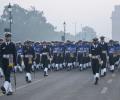
The Indian Navy's Republic Day tableau will showcase indigenous platforms like INS Vikrant and a stitched ship from the 5th century CE, highlighting the theme of a 'Strong Navy for a Strong Nation'.

China's latest defence budget surges to $275 billion, fueling its ambitious military modernisation program and intensifying geopolitical dynamics in the region.

Taking Kharg would give the US control over virtually all of Iran's oil exports and thus provide significant leverage, notes Prem Panicker in his must read daily blog on the Gulf War. It would also put American troops within range of Iran's remaining missiles, drones, and artillery on a piece of real estate that is just eight square miles in size, and just 15 miles from the Iranian mainland.

Sri Lanka is deliberating appropriate action after a second Iranian ship sought entry to its territorial waters, following an attack on an Iranian frigate near the island nation. The government is focused on safeguarding lives and regional peace.

Sri Lanka has allowed a second Iranian ship, IRINS Bushehr, to dock at Trincomalee port after it reported engine failure, following the sinking of an Iranian frigate. The move comes amidst heightened regional tensions and a joint US-Israeli attack on Iran.

The United States, which entered this war in expectation of a short, sharp win along the Venezuela model, is now preparing for deeper involvement in a conflict it does not fully control, without the allies it typically relies on, against an adversary that is not behaving as expected, in a global environment that is already absorbing economic shock. Prem Panicker continues his must read daily blog on the Gulf War.

The Chinese military is planning to revamp its English-language instruction in its academies to improve graduates' communication skills on the international stage, according to an article by senior lecturers from the People's Liberation Army (PLA).
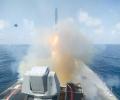
'India was not obliged to protect the Iranian ship.' 'Once the Iranian ship left Indian waters, she was on her own.' 'Guilt tripping India is wrong.'

Iran is fighting a different war: Older, slower, and in some ways more dangerous. Iran doesn't need to shoot down an F/A-18. It only needs to make the Strait of Hormuz feel dangerous long enough for insurance markets, shipping companies, and oil futures traders to do the rest. Prem Panicker continues his must-read daily blog on the war in the Middle East.

The final contours of the theaterisation process could involve the establishment of two integrated theatre commands to counter Pakistan and China, along with a third maritime theatre command.

'Torpedoes travel at more than 100 kilometres per hour, about 50-60 knots.' 'It must have been a matter of a few minutes before it detonated under the Iranian ship.' 'The Iranian ship would have probably got three, four minutes and wouldn't have known till they actually heard the whirr of the torpedo.'

When everyone has footage and no one can verify it, the loudest voice wins, notes Prem Panicker who begins a daily blog on the War in the Middle East.

'The culture of mankind has been spread by the travel gene which pushes one in five people to have the curiosity to move to unknown destinations.'

The Chinese People's Liberation Army's eastern theatre command continued its military drills around Taiwan for a second consecutive day on December 30, involving naval, air and ground forces in what it described as a demonstration of joint operational and blockade capabilities.

Around 100 artistes heralded the parade, on the theme 'Vividata Mein Ekta (Unity in Diversity) that featured a grand presentation of musical instruments, demonstrating the nation's unity and rich cultural diversity.

President Droupadi Murmu undertook a sortie onboard the Indian Navy's INS Vaghsheer, highlighting the nation's naval capabilities and commitment to maritime security.

When missiles fly in this region, they are never just aimed at military targets.

'To suddenly give the impression of taking a position that is hostile to Iran, or, at least, not friendly to Iran, is not a good thing.'

Group Captain Shubhanshu Shukla, the first Indian to visit the International Space Station, has been awarded the Ashoka Chakra, India's highest peacetime gallantry award. The award recognizes his contributions to the Axiom-4 mission and India's advancements in human space exploration.

'As the PLA higher command is almost dismantled and instability spreads, India needs to be prepared for any eventuality,' cautions China expert Srikanth Kondapalli.

Kalra, currently the deputy general manager (customer relations) of state-run Hindustan Aeronautics Limited, was picked up from his office at Scope Complex on Friday morning.

In a culture where children take up the profession of their father, her becoming a politician was seen as natural and acceptable.
 © 2026 Rediff.com - Advertise with us - Disclaimer - Privacy Policy - Sitemap - Feedback - About us - Terms of use - Grievances